FOOD PAIRING
01
For decades, “Japanese beer” meant one of four names: Asahi, Sapporo, Kirin or Suntory. Each built a global reputation on clean, drinkable lagers, and each still dominates supermarket shelves and izakaya taps across the country. But that shorthand has become outdated. A genuine craft beer movement has taken root in Japan, and it deserves its own introduction.
The Brewers Association defines a craft brewer as small and independent, and that definition is a useful lens for looking at Japan’s brewing scene today. Some of the country’s most interesting breweries fit that description precisely. Others complicate it, operating as smaller arms of much larger companies. Both are worth understanding if you want a real picture of where Japanese beer is heading.
The clearest sign that something has changed sits inside Kirin’s own portfolio. Spring Valley Brewery is Kirin’s dedicated craft beer brand in Japan, built specifically to explore styles and flavours the company’s mainstream lagers were never designed for. That one of the original big four now runs a craft-focused offshoot says something about how far consumer appetite has shifted. Drinkers who once had lager and little else now expect variety, and even the biggest brewers are responding.
It’s worth sitting with that for a moment. Spring Valley isn’t a rebrand or a marketing exercise slapped onto an existing beer. It’s a distinct operation built to behave more like the smaller breweries it now shares shelf space with, right down to the range of styles it produces. Whatever you think about a corporate giant entering the craft conversation, it’s a useful entry point for anyone assuming Japanese beer stops at four familiar logos.
If Spring Valley represents the new guard, Shiga Kogen represents something closer to a natural evolution. The beers are brewed by Tamamura Honten, a sake maker that has been operating since 1805. That’s not a typo. This is a brewery with roughly two hundred years of fermentation experience behind it, long before it ever turned its attention to beer.
What makes Shiga Kogen distinct is where its ingredients come from. Tamamura Honten draws on hops, rice and berries sourced from the Japanese Alps region, tying the beer directly to the landscape surrounding the brewery. That regional specificity matters. A rice-inflected beer brewed with Alpine hops doesn’t taste like a generic import attempting a Japanese accent. It tastes like a product of a specific place, made by people who already understood fermentation on a deep level before they started experimenting with beer styles.
There’s a lesson here for anyone assuming craft beer has to mean a scrappy start-up with no history. Sometimes the most interesting new beer comes from a producer that has been quietly mastering fermentation since well before “craft” was a category anyone needed to name.
Not every notable Japanese brewery comes with two centuries of history behind it. Uchu Brewing is a newer name, and it has earned recognition well beyond Japan’s borders, gaining attention at international beer festivals in the region. For a country whose brewing reputation was long built on lager consistency, having a newer, independent name recognised on that kind of stage is a meaningful marker of how much the craft scene has matured.
Uchu sits alongside another name worth knowing for similar reasons. West Coast Brewing is a Japan-based craft brewery known internationally for hop-forward American-style beers, a style choice that signals just how far Japanese brewers are willing to stretch beyond their own traditional palate. Where Shiga Kogen draws on centuries of local sake-making tradition, breweries like West Coast Brewing are looking outward, borrowing techniques and flavour profiles from American craft brewing and reinterpreting them for a Japanese audience. Both approaches are valid, and both are proof that “Japanese craft beer” isn’t a single, tidy category.
Put Spring Valley, Shiga Kogen, Uchu Brewing and West Coast Brewing together and a clearer picture starts to form. Japan’s modern craft beer market has expanded well beyond the historic big four national brands into small regional breweries across areas like Shizuoka, Nagano and Hokkaido. Each of these regions brings its own climate, water source and local ingredients to the brewing process, which is part of why the resulting beers vary so widely.
You’ll find rice lagers built for humidity and long drinking sessions, hazy IPAs clearly influenced by American brewing trends, and everything in between, brewed by producers ranging from centuries-old sake houses to brand-new independent outfits with no legacy to lean on. That range is the real story here. It’s not that Japan quietly built one impressive craft brewery. It built an entire ecosystem, spread across regions that each have something different to say about what Japanese beer can be.
For drinkers used to thinking of Japanese beer as a narrow, predictable category, that’s a genuinely useful thing to sit with. The four familiar names haven’t gone anywhere, and they still make up the bulk of what’s sold domestically. But they’re no longer the whole conversation, and treating them as such means missing most of what’s actually interesting about Japanese brewing right now.
If you’re new to this side of Japanese beer, there’s no need to memorise every brewery mentioned here before your next order. Start with whichever story appeals to you most: the corporate giant experimenting with craft, the two-hundred-year-old sake maker turning its attention to hops, or the independent names earning international recognition on their own terms. Each one gives you a genuinely different entry point into the same broader shift.
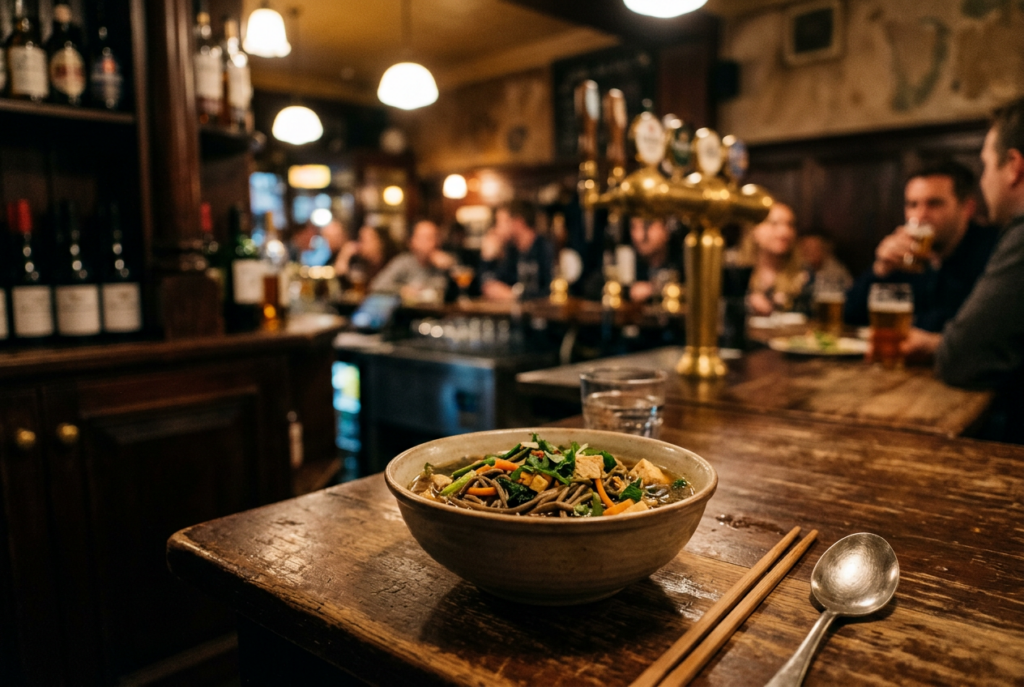
If you want a wider view before narrowing things down, it’s worth exploring craft beers from Japan alongside other regions to see how they compare side by side, or checking the best craft beers in Singapore for a local perspective on what’s currently pouring well. And if you’d rather taste your way through it in person, look for a craft beer spot that pairs beer with a proper meal, since a rice lager or a hop-forward pale ale tends to make a lot more sense with food in front of you than it does on its own.