FOOD PAIRING
01
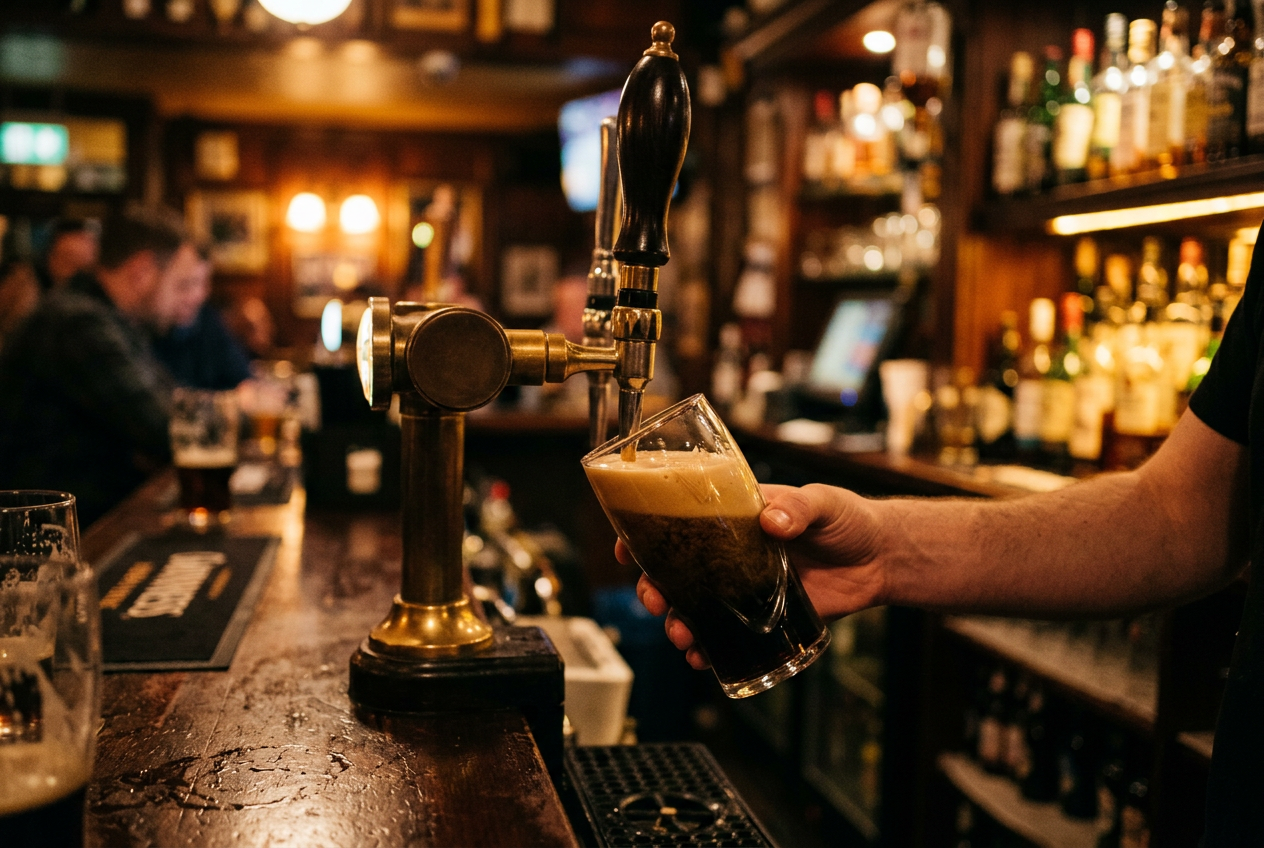
Dark beer has a reputation. Put a pint of stout next to a pale lager and plenty of newcomers look at it warily, as if it might arm-wrestle them. The colour looks heavy, the foam is tan instead of white, and the aroma of roasted coffee seems to promise something serious. It’s easy to assume it’ll be thick, strong and hard work.
Here’s the reassuring part. Most of what makes dark craft beers look so intense comes down to how much the malt has been roasted, not how much alcohol is in the glass. Once you know that, the whole category gets much friendlier.
Below, we’ll walk through the two dark styles you’re most likely to meet, porter and stout. We’ll clear up the colour-versus-strength myth, then explain why dark beer makes more sense in Singapore than you might think, even with no winter in sight.
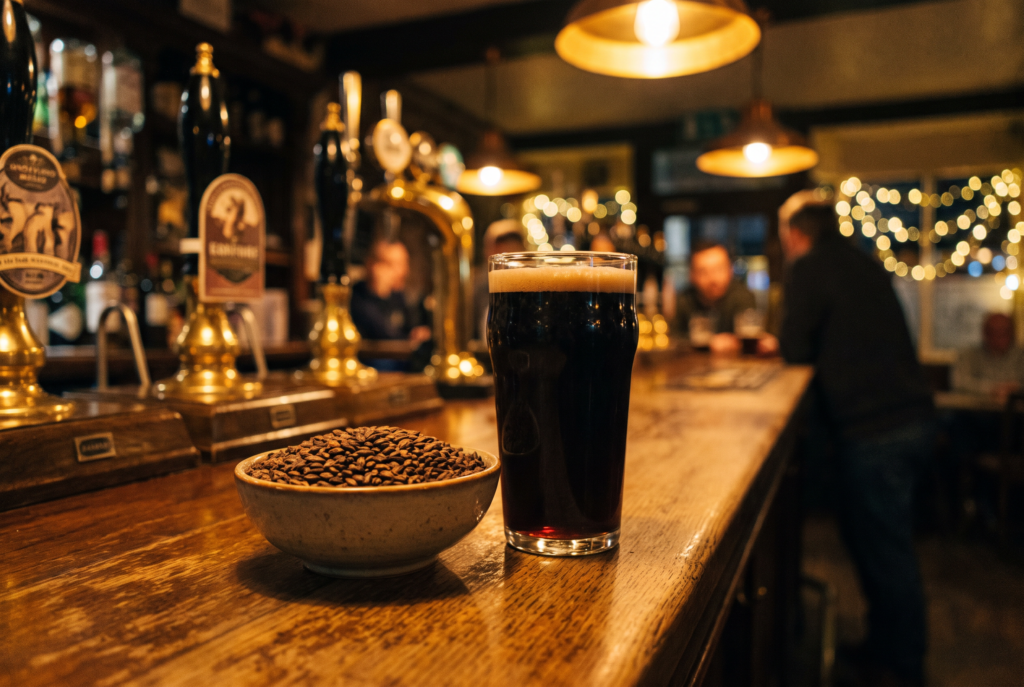
Every beer starts with malt, which is grain that has been sprouted and then dried or roasted. Gentle heat keeps it pale, with flavours of cracker and fresh bread. Turn the heat up and you get caramel and toffee. Roast it hard and the grain heads towards coffee beans, cocoa and the dark edge of burnt toast.
Dark beers simply use more of that well-roasted grain. That’s where the deep colour and the roasty flavours come from. It’s a bit like the difference between a lightly toasted slice of bread and one left under the grill a little longer. Same bread, different heat, very different result.
So when you look at a dark beer, you’re mostly seeing a cooking decision. Keep that in mind and the glass stops looking quite so intimidating. Next, let’s meet the more approachable of the two.
If you’re new to dark beer, porter is a lovely place to start. It has all the roasted charm without always going full throttle.
According to the BJCP style guidelines, the framework beer judges use to define styles, American Porter ranges from medium-brown to very dark brown in colour. The body sits around medium to medium-full, and carbonation can run anywhere from moderately low to moderately high. In plain terms, it’s dark but not necessarily jet black, with enough weight to feel satisfying and enough fizz to keep it lively.
The roasted malt does most of the talking. Expect notes like:
The finish is often fairly clean, with a light roasty bitterness that fades rather than clings. That’s what makes porter so easy to keep sipping. It feels like dessert in the nose, but it drinks more like a long, relaxed conversation.
Porter is brilliant with food that has a bit of char or sweetness. Picture a yakitori skewer brushed with glossy, caramelised tare. The sweet-salty glaze meets the beer’s cocoa and toast notes, and the two seem to finish each other’s sentences. We’d happily take a good porter over another generic lager with that kind of plate.
If porter wins you over, the next step is its darker, fuller cousin.
Stout shares a lot of family traits with porter. Both get their colour and roasted character from roasted malts. The difference is mostly one of volume. Stout is often darker still, fuller in body, and its roasted flavours tend to be more pronounced.
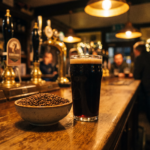
Hold a stout up to the light and you’ll often find it close to black, with very little light getting through. The foam usually leans tan or mocha. In the mouth, it tends to feel rounder and more coating, the kind of beer you notice on your tongue a few seconds after you’ve swallowed.
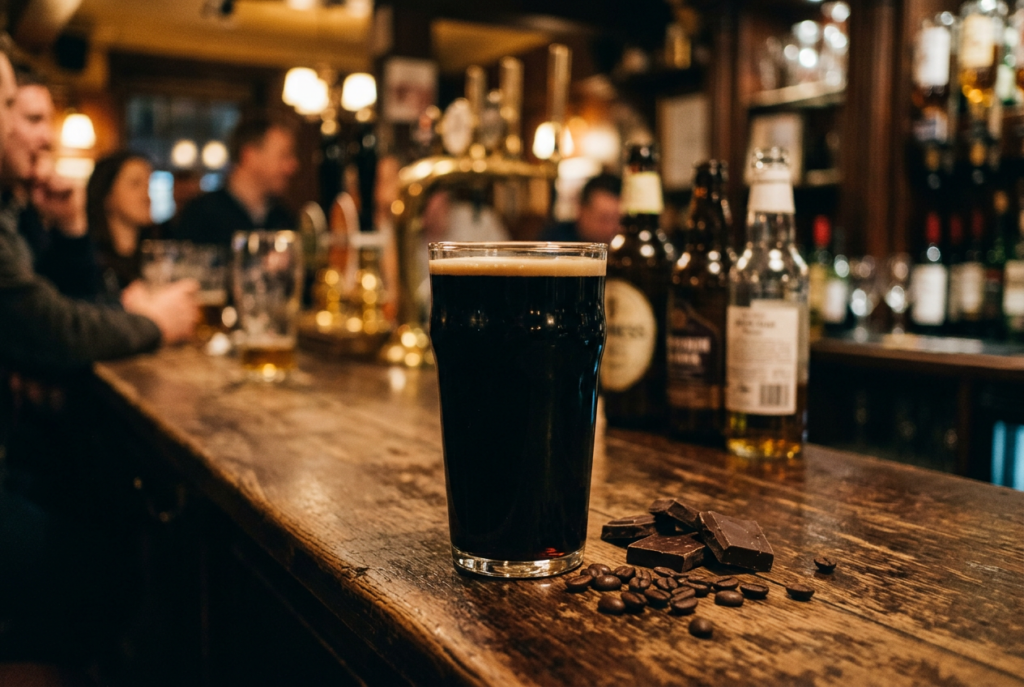
Expect notes of coffee, cocoa, dark chocolate, toast, and sometimes a gentle burnt edge, though good stout should not simply taste charred. Sweetness can range from dry and bittersweet to rich and dessert-like, depending on the malt bill and any additions such as lactose, oats, or vanilla. Hops are usually present for balance rather than aroma, letting the dark malt character take centre stage.
Take everything porter does and turn the roast up a notch:
That roasted bitterness is part of the appeal. It’s similar to the bitterness in a strong black coffee or a high-cocoa chocolate bar. It isn’t harsh, just firm and grown-up.
Neither is the “proper” dark beer. They’re just two settings on the same dial. Which brings us to the bit that trips people up most.
It’s one of the most common assumptions in beer: the darker the glass, the bigger the punch. It feels logical. Dark beers look heavy and smell rich, so surely they’re higher in alcohol too.
Not automatically. A beer’s colour and its alcohol strength are controlled by different things.
A brewer can turn one of those dials without touching the other. That means a near-black stout might drink lighter than you expect, while a pale golden beer can quietly be the stronger of the two. Judging strength by colour is a bit like judging a curry’s heat by the colour of the bowl.
So if strength matters to you, check the menu or ask. Let the colour tell you what it’s actually good at: hinting at roast, coffee and chocolate. Now for the question every Singapore drinker eventually asks.
Dark, roasty beers are traditionally linked with cooler months. Think of fireplaces, woolly jumpers and snow outside the window. Singapore offers none of that, so it’s tempting to file stout under “holiday drinking only”.
That would be a shame, because dark beer works just as well here, as long as you choose the right moment. Our “cooler nights” are mostly man-made, and they suit a porter or stout surprisingly well.
Step out of the humid air into a properly chilled room and your body relaxes. That’s when a darker beer starts to make sense. You’re not chasing pure refreshment any more. You want something to linger over, and a porter’s cocoa and toast or a stout’s espresso and burnt-toast finish reward slow sipping. A comfortable indoor evening at a craft beer bar is about as close to a winter night as this city gets, and it’s a good one.
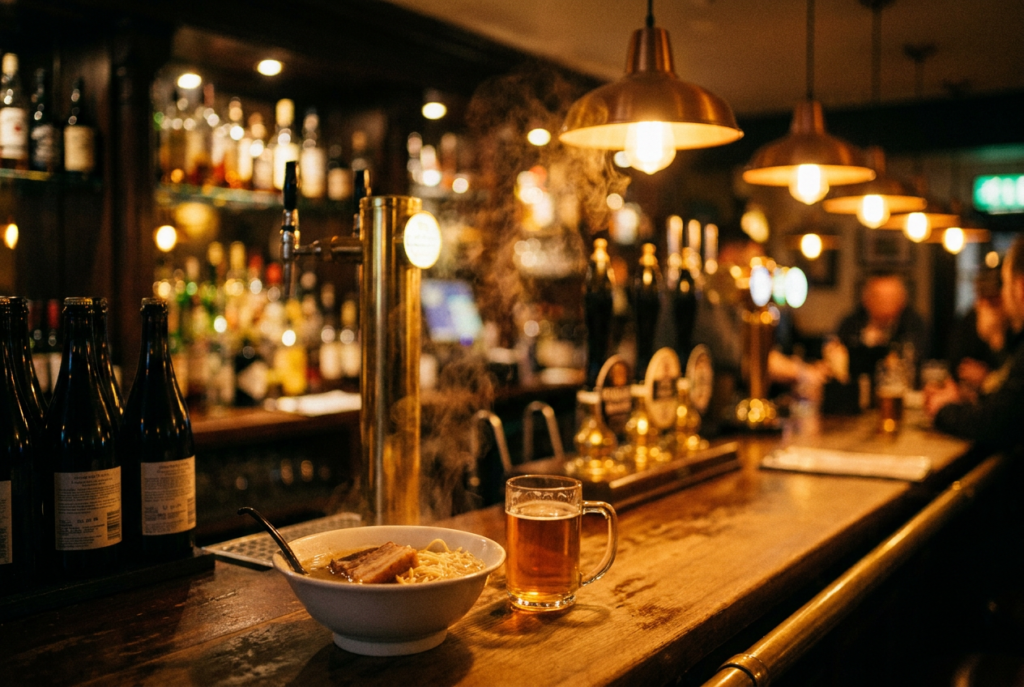
Dark beer also comes into its own with food. Those roasted malt flavours echo the char on anything that’s been near a flame. A few pairings we’d suggest trying:
Outdoor temperature barely matters here. What counts is the setting and the plate in front of you. If you’d like to see where dark pours fit into the wider local picture, our rundown of the best craft beers in Singapore is a good companion read.
Next time you visit Craft Beer by Ki-setsu at Fortune Centre, settle into the air-con and ask the team what dark beer is pouring that night. If there’s a porter and a stout on, order both and taste them side by side.
Look first: which is darker, and which lets more light through at the edges? Smell next: is it filter coffee and milk chocolate, or espresso and cocoa powder? Then sip and notice the body. Does one feel rounder and longer on your tongue?
Finally, order a grilled skewer with a sweet glaze and go back to each beer after a bite. Pay attention to which one makes the food taste better, and which makes you want the next bite sooner. Before you guess which beer is stronger, check the menu. You might be surprised.
Is dark beer stronger than pale beer? Not necessarily. Colour comes from malt roast level, while strength comes from fermentable sugar content. A dark beer isn’t automatically higher in alcohol.
What’s the difference between porter and stout? Both get their colour and roasted flavours from roasted malts. Stout is often darker and fuller-bodied, with a more pronounced roasted character.
What does porter taste like? Expect roasted notes like coffee and chocolate, often with some toast and caramel. The BJCP describes American Porter as medium-brown to very dark brown with a medium to medium-full body.
Is dark beer only for cold weather? No. It’s traditionally linked with cooler months, but it suits air-conditioned indoor evenings and rich, grilled food just as well, whatever the temperature outside.
What food goes well with dark beer? Grilled and charred dishes, sweet-glazed skewers and fatty meats all work nicely, since the roasted malt echoes the char and cuts through richness.