
FOOD PAIRING
01
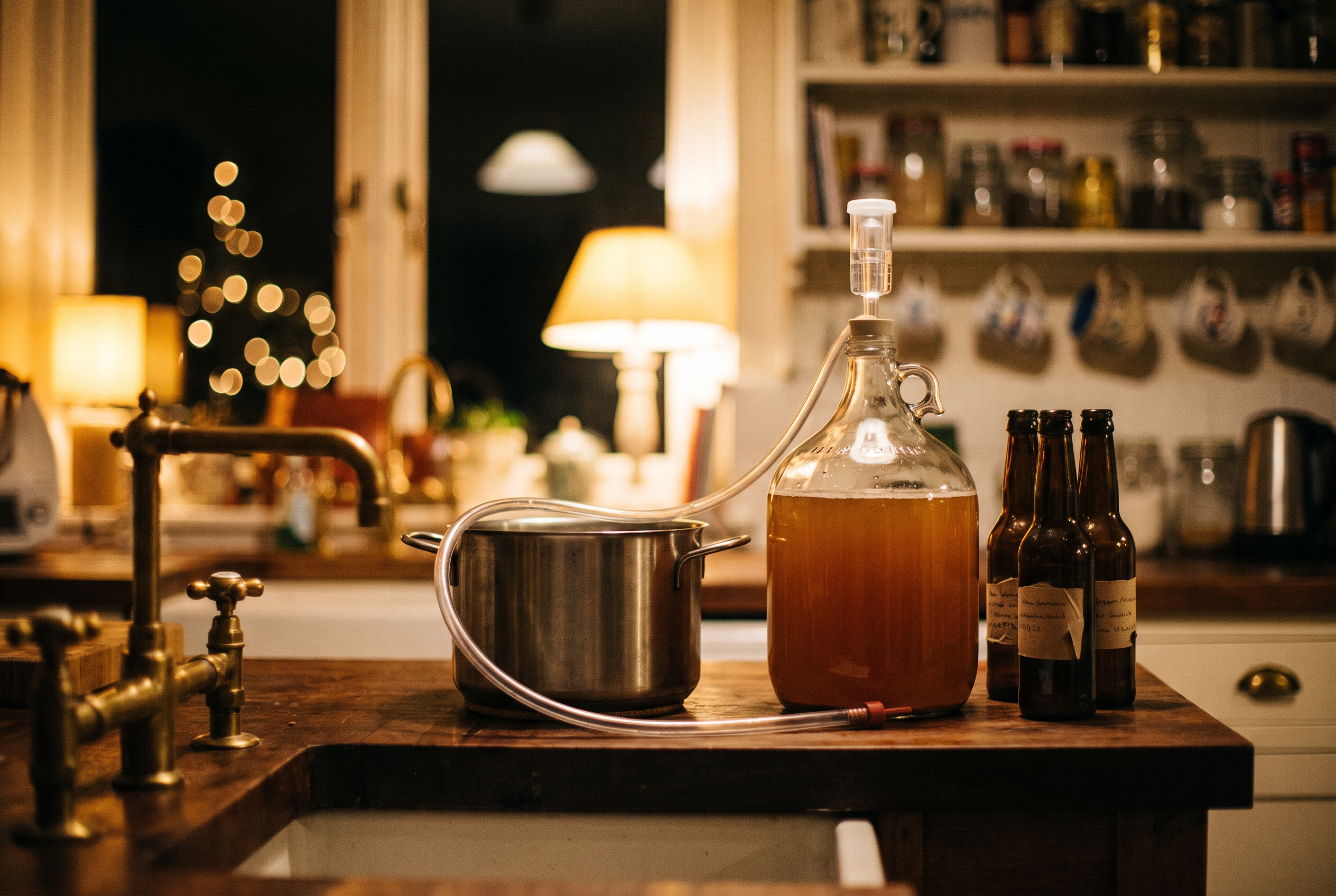
Plenty of professional brewers didn’t start in a gleaming brewhouse. They started in a kitchen, a spare room or a cramped corner of a flat, stirring a big pot and hoping for the best. Many of the people behind today’s craft beers began as home brewers, including several founders profiled elsewhere on this site. The hobby came first. The business came later.
That’s part of the appeal. Home brewing isn’t a closed club for chemists. You learn it one batch at a time. Even if you never go pro, making beer yourself changes how you taste everyone else’s.
Here’s a friendly look at how it works, what you’ll need and the one habit that matters more than any other.
Beer making sounds technical, but the basic steps follow a simple logic. Think of it as cooking, with a long wait at the end.
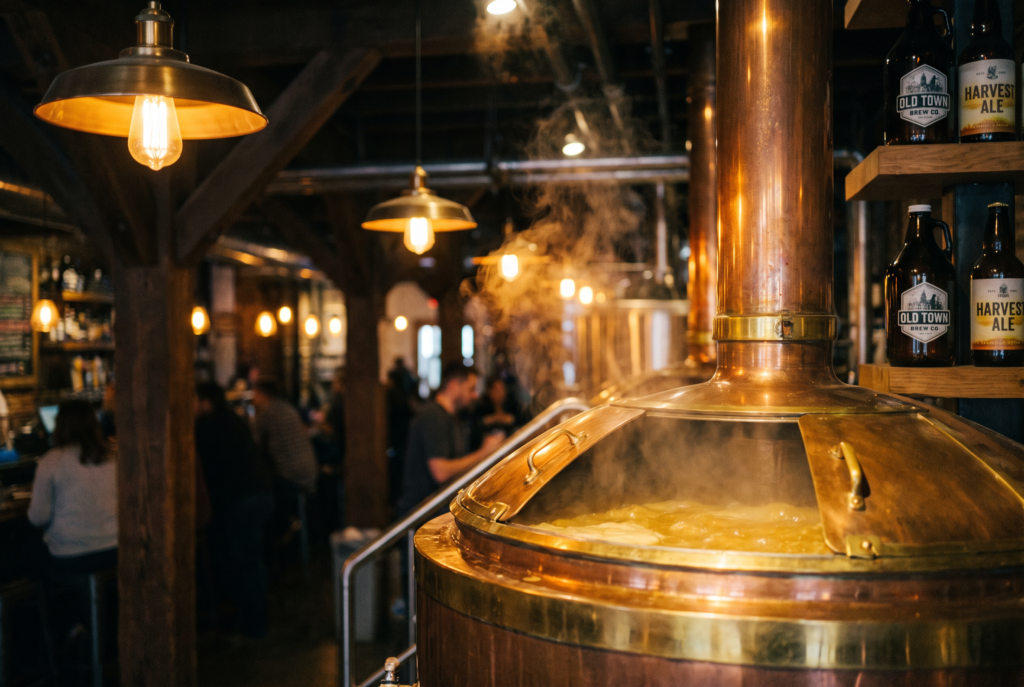
Mashing means soaking grain in hot water so it releases its sugars. Those sugars are what the yeast will later turn into alcohol. The sweet liquid you end up with smells a bit like warm porridge or malted milk biscuits.
Next, that sugary liquid goes on to boil, and the hops go in. Hops bring bitterness to balance the sweetness, along with aroma. Depending on the variety, that might mean grapefruit peel, pine needles or something closer to fresh-cut flowers.
After the boil, the liquid needs to cool before the yeast arrives. Yeast is a living thing. Tipping it into something too hot is a bit like jumping into a bath you’ve just filled from a boiling kettle.
Once it’s cool enough, you add yeast and leave it be. The yeast eats the sugars and produces alcohol and fizz, plus a good share of the flavour. From the outside, not much seems to happen. Inside, the beer is quietly taking shape.
Finally, the finished beer goes into bottles, cans or kegs. At home, bottles are the usual starting point. Bars tend to pour from kegs, and if you’re curious about that side of things, you can read more about draft beer here.
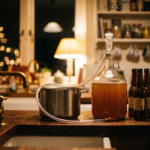
Here’s the good news: you don’t need a warehouse. A basic home brewing kit is fairly easy to get hold of. It typically covers the essentials for a first batch: something to brew in, something to ferment in and a way to bottle the results.
Your first beer may not be perfect, and that’s completely normal. Results improve with practice and close attention to cleanliness. Most home brewers can describe an early batch that tasted more of lessons learned than of malt and hops. Then the next one is better, and the one after that better again.
A few beginner tips:
If every home brewer agrees on one thing, it’s this: cleanliness and sanitation matter more than almost anything else. Contamination is the most common reason a batch fails.
The reason is simple. Sugary liquid is a feast, and not only for your yeast. Unwanted microbes will happily move in if you give them the chance. They can leave you with flavours you never asked for, closer to sour milk or a damp cupboard than toasted bread and orange zest.
That’s why experienced brewers can seem a little obsessive about cleaning. Everything that touches the beer once it has cooled needs to be clean and sanitised, from the fermenter to the bottles. It’s the least glamorous part of the hobby. It’s also the part that decides whether you pour a beer you’re proud of or tip it down the sink.
Think of a sushi counter. Beautiful fish counts for little if the knife and board aren’t spotless.
Every brewery starts with a first batch, and for many founders, that batch was brewed at home. The hobbyist path isn’t a footnote in craft beer. For several of the founders we’ve profiled on this site, it was the beginning. They learned on small setups, made mistakes, got stricter about cleaning and kept at it until friends started asking for more.
Next time you’re at Craft Beer by Ki-setsu at Fortune Centre, order a beer with your brewer’s hat on. Before you sip, smell it and try to split it into parts. What is the malt doing: bread, caramel or roast? What do the hops add: citrus, pine or flowers? Then ask the folks at Craft Beer by Ki-setsu for a taster of a contrasting style and repeat the exercise. Notice how far four simple ingredients can travel. It’s the best homework a future home brewer could ask for.
Did many professional brewers start as home brewers? Yes. Many professional craft brewers began brewing at home before turning the hobby into a business.
What are the basic steps of home brewing? You mash grain to extract sugars, boil the liquid with hops, cool it, ferment it with yeast, then package the finished beer.
Do I need expensive equipment to start? No. A basic home brewing kit is fairly accessible, and your results will improve with practice.
Why is sanitation so important in home brewing? Contamination is the most common cause of a failed batch, so keeping everything clean and sanitised matters more than almost anything else.
Will my first batch be good? It might be, but don’t worry if it isn’t. Most brewers improve batch by batch, especially as their cleaning habits tighten up.