FOOD PAIRING
01
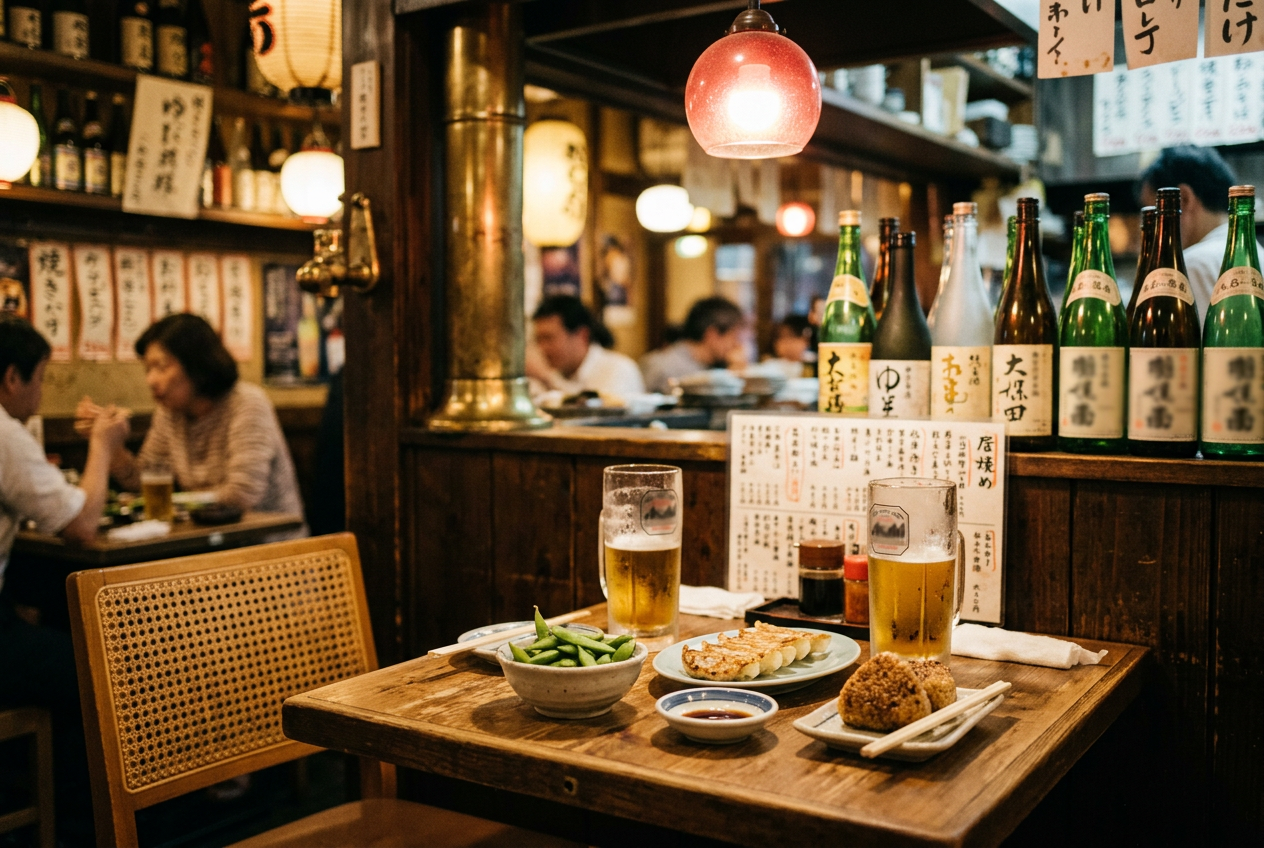
An izakaya is a casual Japanese establishment that serves drinks and food together, built for lingering rather than a quick pint. The word combines “iru” (to stay) and “sakaya” (sake shop), reflecting its roots in sake shops that let customers drink on the premises. Expect shared small plates, an automatic starter dish, and an unhurried pace.
An izakaya is a casual Japanese establishment that serves drinks and food together, built for the kind of evening where nobody’s watching the clock. Unlike a bar that pours a pint and leaves the eating to someone else, an izakaya treats food as part of the main event from the first order.
The format is simple: order a few small dishes, order a drink, and keep both coming as the night goes on. Nothing arrives as a single “main course.” Everything is shared, and everything is meant to be eaten slowly alongside whatever’s in the glass.
Izakaya (居酒屋) is built from two parts: “iru,” meaning to stay, and “sakaya,” meaning sake shop. Put together, the word describes exactly what these places became. According to Wikipedia, izakaya grew out of sake shops that allowed customers to sit and drink on the premises, which explains why food, originally an afterthought, ended up so central to the format over time.
The word itself is a relatively recent arrival in English. Izakaya entered English-language use by 1987, decades after the format had already become a fixture of everyday life in Japan.
Walk into an izakaya and the first thing that usually lands on the table isn’t something anyone ordered. Many izakaya serve an otoshi, also called a tsukidashi, a small starter dish given automatically at the start of a meal. It isn’t a freebie. It’s often served in place of a cover charge, so expect it to show up on the bill.
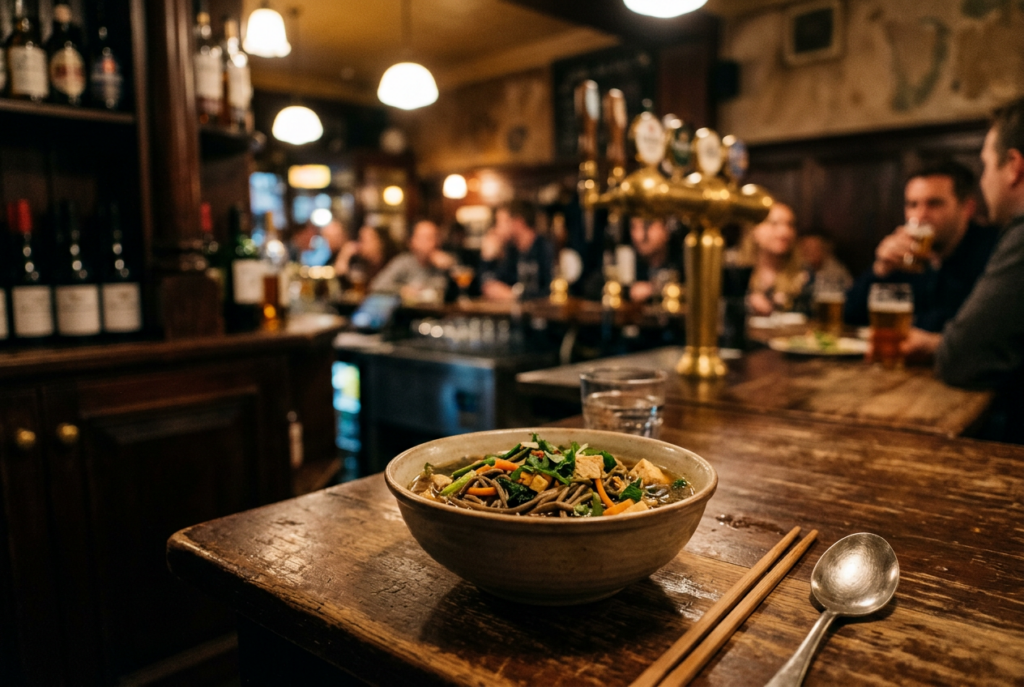
From there, the format is built around shared small plates rather than one person’s individual dish. A table might order grilled skewers, a plate of fried chicken, a cold tofu dish and a few pickles, all landing at different times and all meant to be picked at together. There’s no fixed order and no rush. Drinks get topped up, another plate gets ordered when the table’s ready, and the evening stretches out as long as it needs to.
At a typical Western bar, food is often an afterthought: bar snacks, maybe a pub menu, usually secondary to the drinks list. An izakaya flips that priority. Food is central, not an afterthought, and the kitchen’s output shapes the whole experience as much as what’s on tap or in the fridge.
That difference also affects pacing. A Western bar crawl can be quick: in, drink, out. An izakaya is built for staying put, which is baked into the word itself. The format rewards a table that orders a little, talks a lot and keeps ordering as the night goes on, rather than one that’s in and out in twenty minutes.
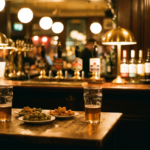
This same idea, food and drink arriving together rather than one playing second fiddle to the other, is exactly what Craft Beer by Ki-setsu is built around. As a craft beer bar Singapore with Japanese-inspired dishes on the menu, the pace runs closer to an izakaya than a typical bar: order a plate, order a pour, order another of each when ready, not before.
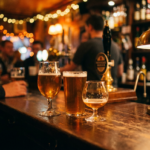
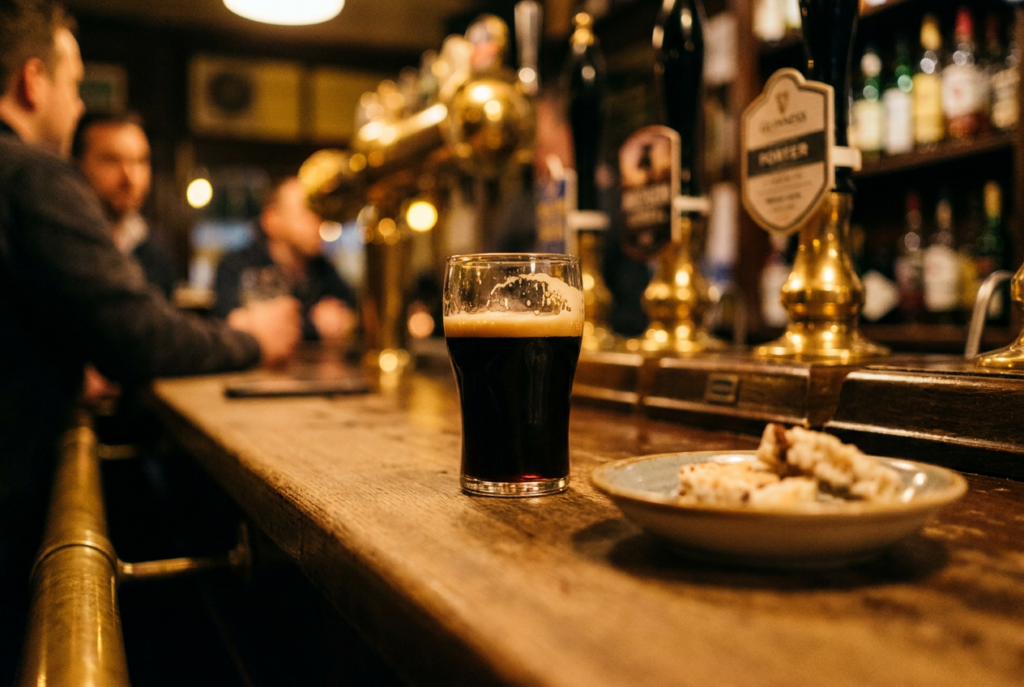
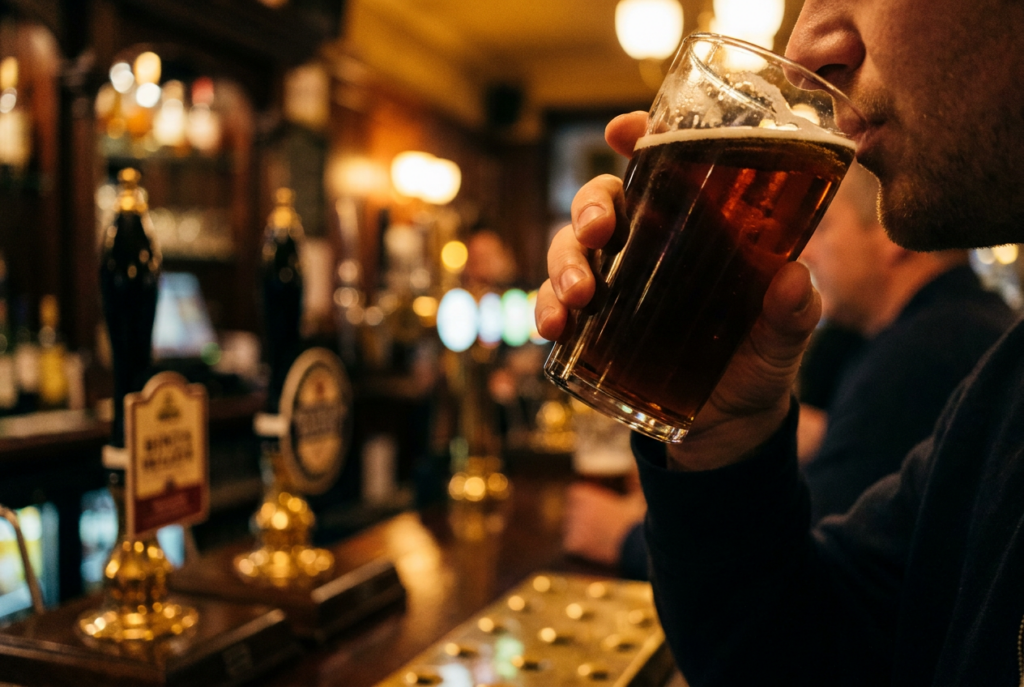
The beer side of that equation rotates often. Craft Beer by Ki-setsu operates as a craft beer bar with a rotating international selection, bringing in styles from Japan, Taiwan, Australia and Singapore alongside Suntory The Premium Malt’s Pilsner on tap. Pale ales, often fruity and tropical, cut nicely through fried dishes, while dark ales bring roasted malt, coffee and chocolate notes that hold their own against heavier, richer plates, the same logic that shapes an izakaya menu in the first place.
If this kind of unhurried, food-first evening sounds appealing, the best izakaya spots in Singapore is worth a look for more places built around the same idea.
Next time an evening out is on the cards, try ordering izakaya-style: a couple of small plates, a pour to match, and no fixed order for what comes next.