FOOD PAIRING
01
No, “craft” isn’t a health rating. It’s a legal and business definition about a brewery’s size and independence, not what’s in the glass. Calories and alcohol content vary widely across both craft and mass-market beers, driven by style and strength, so checking the ABV and any nutritional panel matters more than the word “craft” on the label.
Walk into any bottle shop and you’ll hear the assumption before anyone says it out loud: craft beer must be the healthier pour. It sounds small-batch, maybe even a little artisanal, so surely it’s gentler on the waistline than the lager everyone’s uncle has been drinking for decades. It’s a tidy story. It’s also not quite accurate, and it’s worth unpacking before you build a drinking habit around it.
The word gets used constantly at any craft beer bar, but it’s rarely explained properly. Under the definition used by the Brewers Association, a craft brewer is essentially small and independent: it sits under a set annual production threshold, and it isn’t substantially owned or controlled by a larger, non-craft beverage company.
That’s the whole test. Nothing in it touches calories, carbohydrates, or sugar content. It’s a structural label about who owns the brewery and how much beer they’re allowed to make while still calling themselves craft. It says nothing about what actually happens inside the bottle.
Because style and strength are doing the real work, not the craft label. A crisp, sessionable pilsner from a large Japanese brewer can easily sit lighter, in both alcohol and calories, than a boozy imperial stout brewed by a five-person operation two suburbs over. The same logic applies if you’re comparing pours of draft beer Singapore drinkers order most: a crisp draft lager and a barrel-aged strong ale can come from breweries of similar size and independence, yet land on opposite ends of the ABV scale entirely.
Higher alcohol by volume generally means more calories, since alcohol itself carries energy. Residual sugar, the malt bill, and how heavily a beer is hopped all shift the number further. None of that has anything to do with whether the brewery producing it counts as craft or not. A hazy, higher-strength pale ale and a mass-market pilsner aren’t really comparable at all. They’re different products serving different moods, not two points on a single health spectrum.
If you’re weighing up options with calories or alcohol intake in mind, skip the “craft” question altogether and look at two things instead.
Comparing a 4% pale lager against a 4% pale ale will get you a far more honest read than comparing “craft” against “not craft.” The label tells you about the business behind the beer. The ABV tells you about what’s actually in your glass.
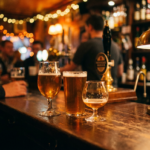
None of this is an argument against craft beer. It just means choosing it for the story, the flavour, or the independent brewery behind it is a perfectly good reason, while choosing it purely as a health shortcut isn’t backed by the definition itself. Next time you’re at a craft beer bar with a rotating international selection, try lining up two beers of similar ABV but different styles, say a pale lager against a pale ale, and taste the difference for yourself rather than assuming one is automatically the lighter option.
At Craft Beer by Ki-setsu on Level 4 of Fortune Centre, ask the team to point you toward the lower-ABV pours on rotation that evening if that’s what you’re after. They’ll know exactly what’s currently on tap and in the fridge, and they can talk you through it glass by glass.