FOOD PAIRING
01
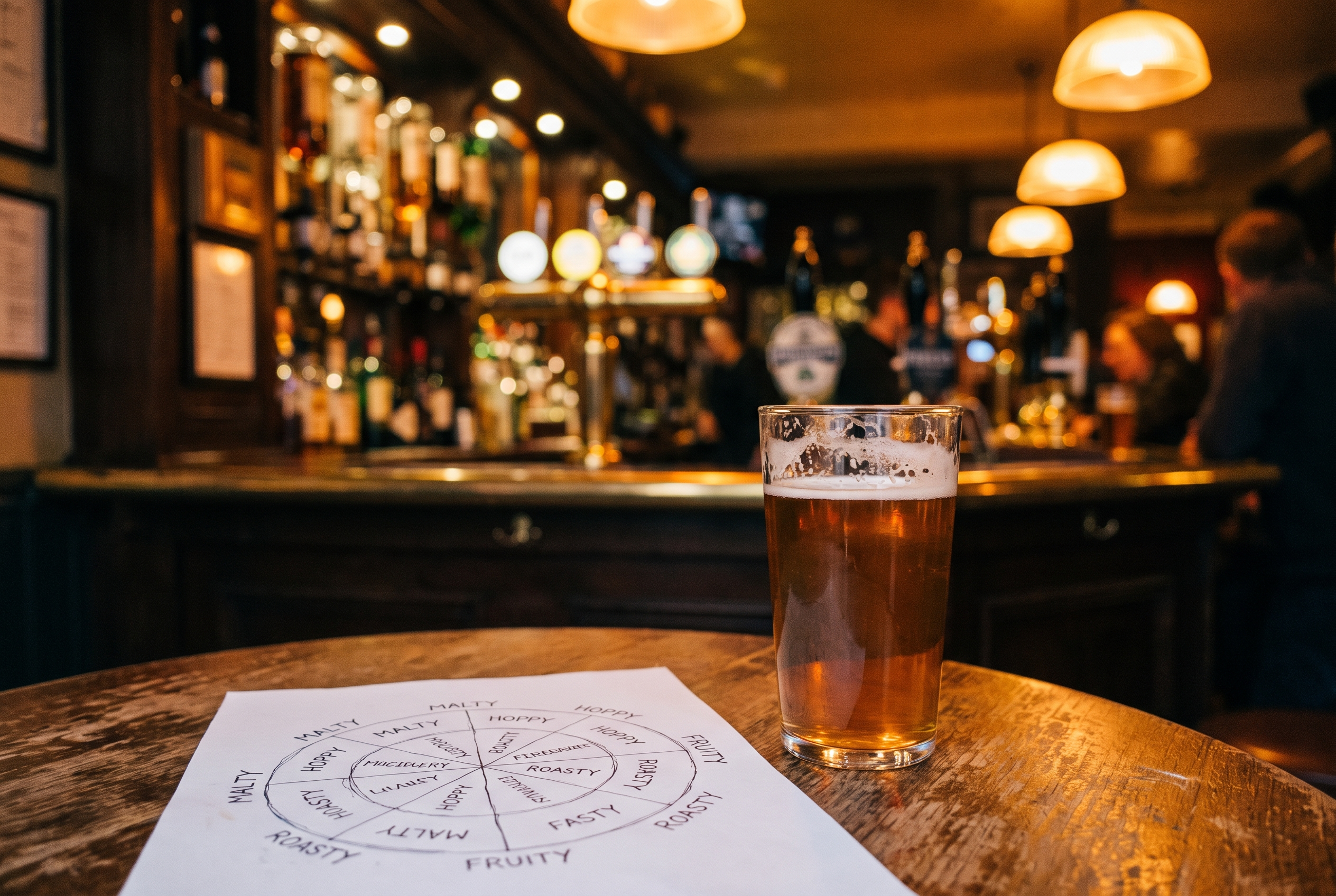
A beer flavour wheel is a circular chart that groups flavour and aroma descriptors into broad categories such as fruity, floral, roasted, and spicy. It gives drinkers a shared vocabulary instead of vague terms like “good” or “complex,” and the easiest way to use one is to taste a beer, then find the category that feels closest rather than hunting for one exact note.
A beer flavour wheel looks a little like a colour wheel, except instead of red bleeding into orange, you get fruity bleeding into floral, floral bleeding into herbal, and so on around the circle. Each segment represents a broad family of flavours and aromas: fruity, floral, roasted, spicy, and several others. Within each segment sit more specific descriptors that narrow things down further. It’s a map of what beer can taste and smell like, laid out so you can see how different sensory experiences relate to one another.
Most of us default to the same handful of words when someone asks what a beer tastes like. “It’s good.” “It’s complex.” Neither of those tells the other person anything they can actually use. A flavour wheel exists to fix that gap. Rather than reaching for a vague compliment, it gives drinkers a shared vocabulary for describing what’s actually in the glass: fruity, floral, roasted, spicy, and the rest, so two people tasting the same beer can compare notes and know they’re talking about the same thing.
That shared language matters more than it might sound. If you check out the bar here and order two very different pours side by side, having categories to reach for makes it far easier to explain why one landed differently to the other, without needing a wine-critic vocabulary to do it.
Here’s where a lot of people trip up. They stare at a flavour wheel expecting to land on one precise word (“passionfruit,” say, or “clove”) and feel like they’ve failed when nothing quite fits. That’s not really how the wheel is meant to work.
The more useful approach is to taste the beer first, then scan the wheel for the broad category that feels closest, rather than trying to pinpoint one exact note straight away. If a beer tastes bright and a little tangy, “fruity” might be as far as you need to go on a first pass. If there’s a dry, toasty edge to it, “roasted” might be the segment that fits. You can always get more specific once you’ve settled on the right neighbourhood, but starting broad takes the pressure off and makes the whole exercise feel a lot less like a test.
This is also where exploring a varied lineup helps. Working through Craft Beer by Ki-setsu’s beer on tap gives you a chance to practise this on beers that sit in genuinely different categories, rather than trying to tell the difference between two beers that taste almost identical.
A flavour wheel is a solid enough tool on its own, but it turns into something more fun when there’s a group involved. Order a flight, hand everyone the same wheel, and have each person independently land on a category for each beer before comparing notes out loud.
What tends to happen is that people don’t all land in the same place. One drinker calls a beer “spicy” while another leans “roasted,” and that gap is genuinely interesting to talk through. Neither answer has to be wrong. It just shows how differently the same beer can register from one palate to another, and it gives the table something to actually discuss beyond “yeah, this one’s nice too.”
If you’re looking for somewhere to run this with a few friends, Craft Beer by Ki-setsu at Fortune Centre is set up for exactly that kind of side-by-side tasting. Order a flight, bring the wheel, and see where everyone lands.
Next time you’re deciding what to order, skip the “good” or “complex” and reach for the wheel instead, then bring a friend along to see if they land somewhere different.