FOOD PAIRING
01
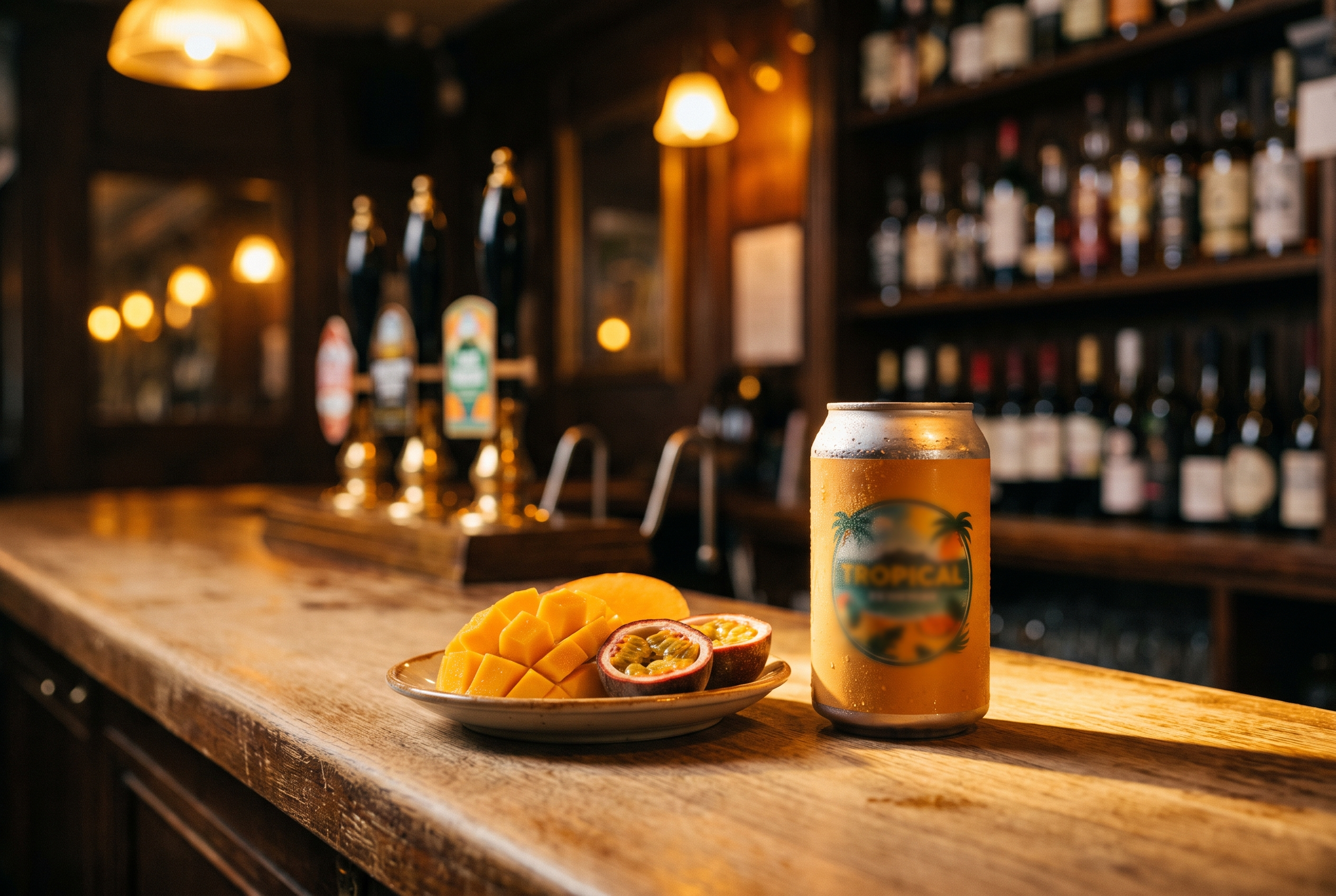
“Fruity” craft beer comes from two different places. Hop-driven pale ales and IPAs get their citrus, mango or passionfruit aromas entirely from the hop variety used, with no fruit added. Fruited sours, by contrast, add real fruit or fruit purée to a tart, lactic-fermented base beer for a more direct, punchy fruit character. Both are worth trying at a craft beer bar in Singapore, but they taste nothing alike.
Ask two drinkers what “fruity beer” means and you’ll likely get two different answers. One might picture a hazy pale ale that smells like a mango on a hot afternoon. The other might be thinking of a puckering, candy-pink sour with actual fruit floating somewhere in its history. Both are correct. Neither is describing the same beer.
That distinction matters more than it sounds. Understanding where the fruit character in your glass is actually coming from changes what you order next, and it explains why two beers marketed with the word “tropical” can taste like they belong in different food groups.
Yes, and this is where most of the confusion starts. A large share of the fruity pale ales and IPAs on tap around Singapore never see a piece of actual fruit. Their aroma comes entirely from the hop variety the brewer chose.
New World hop varieties, grown across the United States, Australia and New Zealand, are prized specifically for throwing off citrus, stone fruit, and tropical aromatics without any fruit addition at all. A hop can smell like grapefruit pith, ripe mango or crushed passionfruit purely through the oils it carries, released during the brewing process. The brewer isn’t adding flavour so much as choosing a hop that already smells like something else entirely.
This is the beer equivalent of smelling lychee in a glass of Gewürztraminer. Nobody added lychee to the wine. The grape variety simply produces aromatic compounds that read that way to your nose. New World hops do the same trick for beer, and it’s why a pale ale or IPA can smell like a fruit salad while containing nothing but malt, hops, yeast and water.
Fruited sours take the opposite route. Instead of relying on aroma compounds from an ingredient that isn’t fruit, they start with an actual tart, lactic-fermented base beer, then add real fruit or fruit purée directly into the mix.
The lactic fermentation is what gives these beers their tartness, a different process from the fermentation used in a standard pale ale or IPA. Once that tart base is established, brewers fold in fruit, sometimes whole, sometimes as purée, to build a beer that tastes considerably closer to dessert than a hop-forward pale ale ever will. The fruit isn’t a suggestion here. It’s an ingredient, and you can taste the difference immediately.
If a hop-driven pale ale is fruit character borrowed from an unrelated ingredient, a fruited sour is the real thing, deliberately blended into a sharp, tangy base. Order both side by side and the contrast is obvious. One is a magic trick. The other is a recipe.
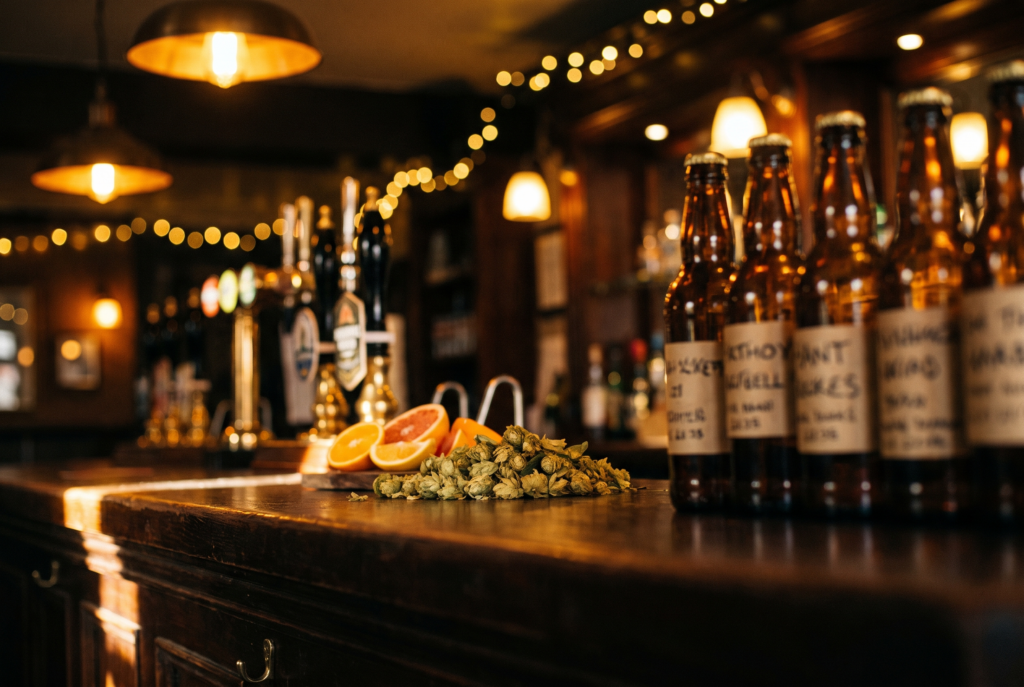
Singapore and other regional breweries have leaned into this second category with fruit that’s genuinely local rather than imported for the sake of novelty. Mango and guava turn up regularly in fruit-forward releases from breweries across the region, and it makes sense. These are fruits people here already know intimately, sold at every wet market and hawker stall, so building a beer around them feels less like a gimmick and more like a fair translation of familiar flavour into a glass.
It also means the fruited sours on offer at any given time tend to reflect what’s genuinely in season and popular locally, rather than whatever fruit happens to photograph well. That’s a detail worth appreciating next time a guava sour turns up on tap.
Here’s the useful bit. The Beer Judge Certification Program, the industry body responsible for defining beer styles, treats these as genuinely separate categories rather than variations on a theme. The BJCP style guidelines draw a clear line between hop-driven pale ale and IPA styles and fruit beer, which sits in its own dedicated category entirely. That’s not a marketing distinction. It’s a recognised structural one, and it explains why the two styles are judged, brewed and described using entirely different criteria.
For a drinker standing at the bar, that translates into a simple decision. If you want something that smells tropical but drinks dry, crisp and hop-forward, reach for a pale ale or IPA built on New World hops. If you want a beer that tastes like the fruit is genuinely present, tart and a little punchy, a fruited sour is the better call. Neither is the “more authentic” fruity beer. They’re simply answering different questions.
The next time you’re at Craft Beer by Ki-setsu, or anywhere with a rotating tap list, ask the staff a direct question: is tonight’s fruity option hop-driven or actually fruited? It’s a fair question, and a good bartender will have an immediate answer, because the two styles are built completely differently, even when the tasting notes on the menu look almost identical.
If you’re planning ahead rather than deciding on the spot, the team at Craft Beer by Ki-setsu can walk you through what’s currently pouring and where it falls on this spectrum, and our pick of the best craft beer to try in Singapore is worth a scan before you go if you like to know your options in advance. Either way, ordering one of each and comparing them side by side remains the most enjoyable way to actually understand the difference.