
FOOD PAIRING
01
Draft beer is brewed and fermented exactly like bottled or canned beer. The difference starts at packaging: the beer goes into a pressurised, refrigerated keg instead. From there, CO2 or a mixed gas blend pushes it through chilled lines to the tap, and how that pour tastes depends heavily on clean lines and steady refrigeration.
Every pint on tap started life the same way a bottle or can did. Same grain, same yeast, same fermentation tank. The path only splits at the point of packaging, when the finished beer gets transferred into a keg rather than sealed into glass or aluminium. That single decision, keg versus bottle, sets off a whole chain of steps that shapes how the beer eventually lands in your glass.
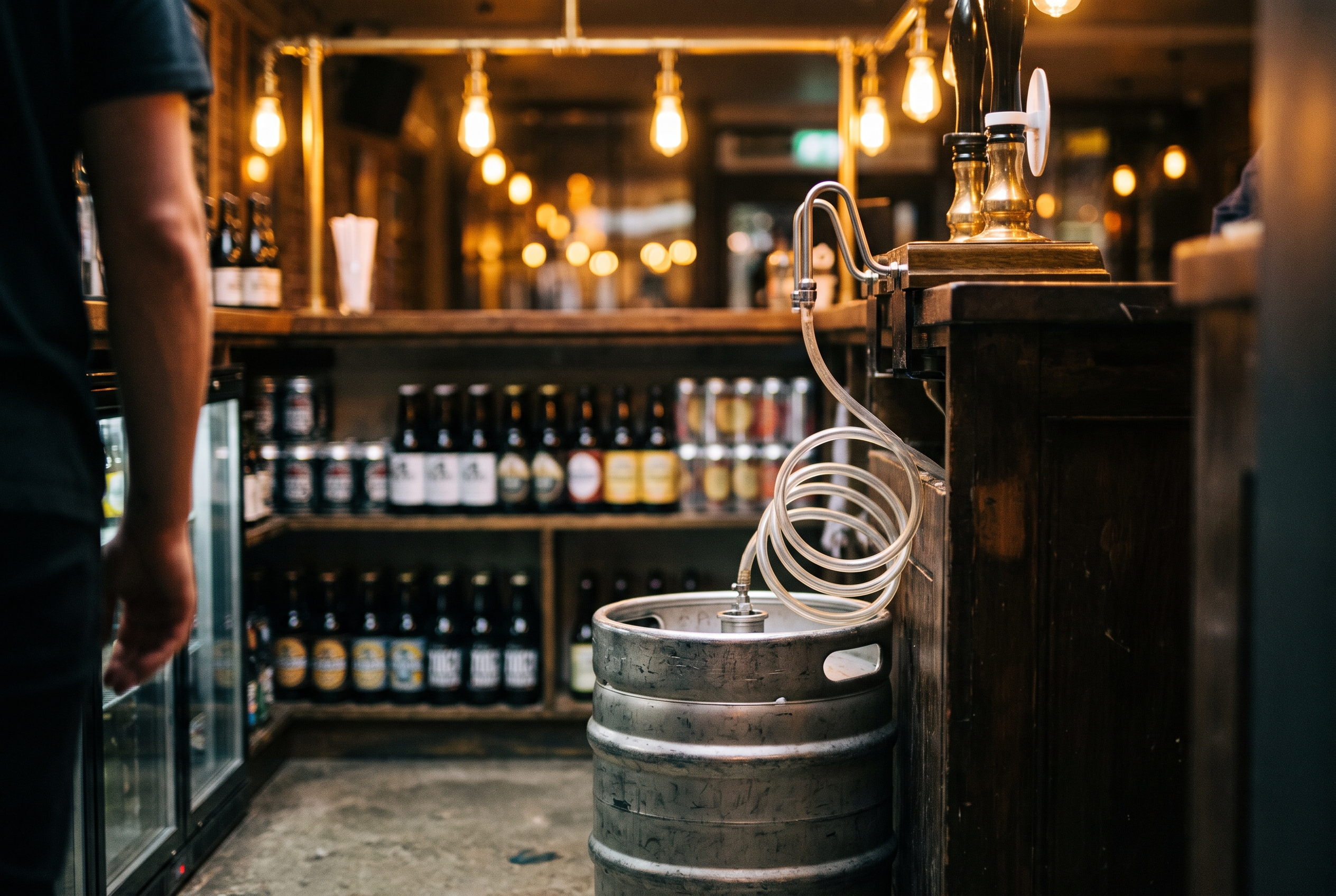
Once fermentation is done, the beer is carbonated and sealed into a pressurised keg. The keg then goes straight into refrigeration, where it stays until it’s tapped. This is a meaningfully different environment from a bottle sitting on a shelf at room temperature. A kegged beer is under constant pressure and kept cold from the moment it’s packaged, which is part of why draft beer has such a specific reputation for freshness. There’s no gap where the beer sits warm before it reaches a glass.
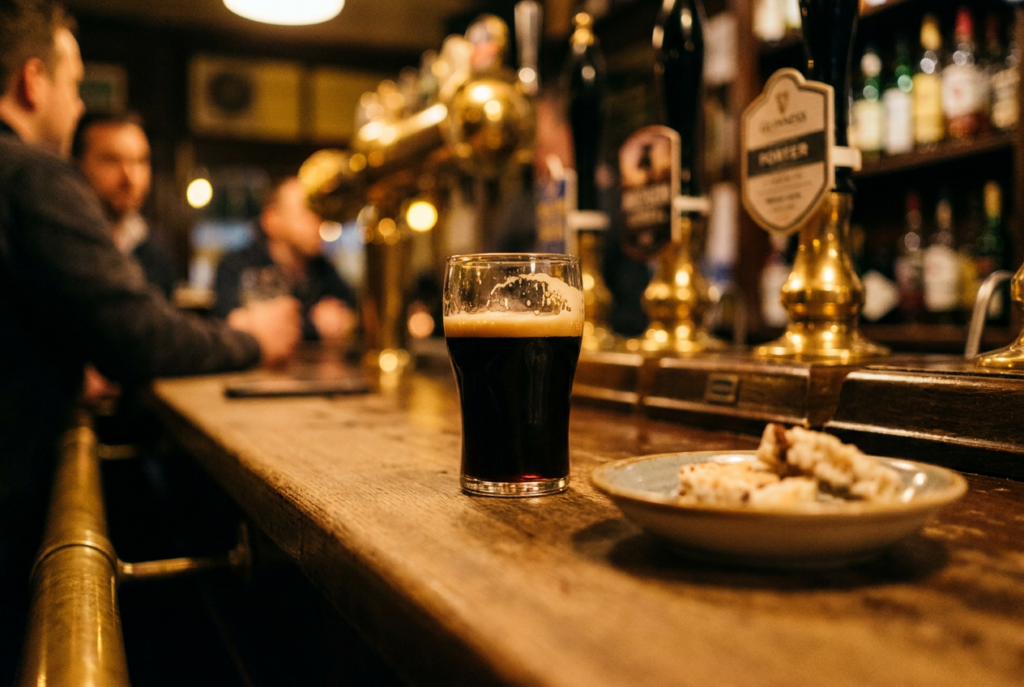
This is where pressurised gas does the work. CO2, or in some cases a mixed gas blend for particular styles, pushes the beer out of the keg and through chilled lines that run to the tap itself. Nothing about this step is passive. The gas has to be at the right pressure, the lines have to stay cold along their entire length, and the whole system has to be balanced so the beer arrives at the tap in the same condition it left the keg. Get any part of that wrong and the beer changes before it ever touches a glass.
If you’ve spent any time exploring beer on tap in Singapore, you’ve probably noticed how differently the same beer can pour at two different venues. That’s rarely down to the beer itself. It’s almost always down to this gas-and-line system behind the bar.
This is the part of draft beer that’s easy to overlook, because none of it is visible from where you’re sitting. Beer lines that aren’t cleaned regularly build up residue that affects flavour, and lines that aren’t kept properly chilled let the beer warm up before it even reaches the tap. Consistent refrigeration and clean beer lines are two of the biggest factors in how a draft pour ultimately tastes. A well-run system means the beer you’re drinking is close to what left the brewery. A poorly maintained one can undo all of that, no matter how good the beer was to begin with.
The brewing side of draft beer is identical to what goes into a bottle or can. The real variable is everything that happens after packaging: the keg, the gas, the lines, and how well a venue looks after all of it. That’s a big part of what shapes Singapore’s craft beer scene right now, as more venues invest in getting the dispensing side right rather than treating it as an afterthought.
Next time you’re ordering a pint, it’s worth asking what’s on tap and how it’s being kept. If you want to see this system working the way it should, visit Craft Beer by Ki-setsu and order whatever’s freshly poured. Taste it against a bottle of the same style if you can. That side-by-side is the easiest way to understand exactly what all this keg and line maintenance is actually for.